

An escape to Injisuthi, Giants Castle
The hike to Grindstone Cave in Injisuthi is the perfect introduction to an overnight hiking experience in the Drakensberg. No slackpacking options available, you need to carry EVERYTHING in your backpack. Sleeping in a cave with no idea what the weather will do – this should be interesting!
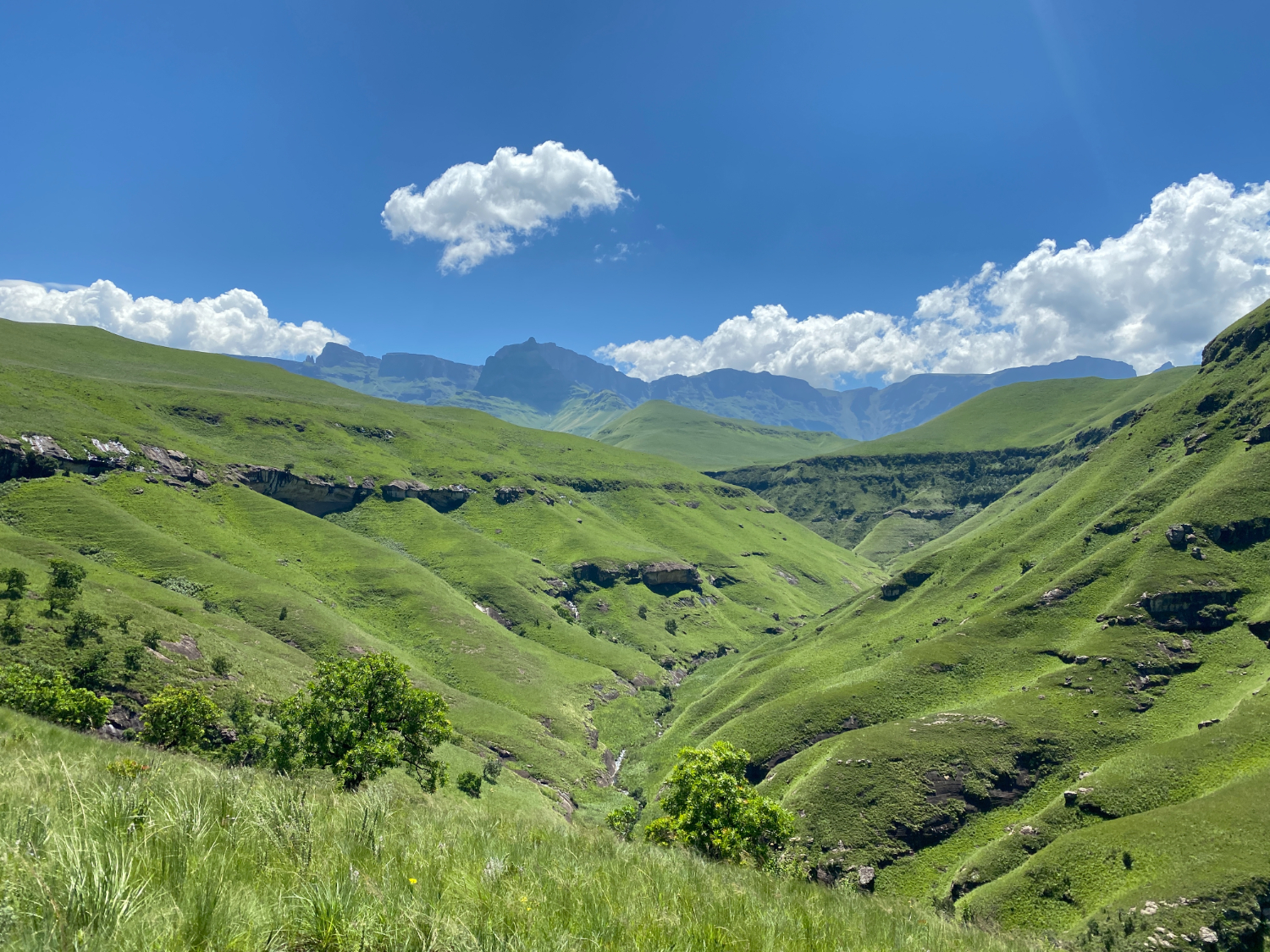
Injisuthi is a region in the Giants Castle area of the Northern Drakensberg. It’s a 5-hour drive from Johannesburg and only 3 hours from Durban making it an ideal getaway for long weekends. As you near the camp within the Drakensberg you start to weave your way around cattle, goats and locals going about their day. The grassy hills and towering mountain tops will spoil you with scenic beauty all around. The Injisuthi reserve and camp is clean and well managed by KZN Wildlife.
The last 20km stretch of road before you reach Injisuthi is a challenge – exposed rocks, potholes and uneven gravel surfaces are common. All that being said, we witnessed an old Citi Golf ahead of us smash the route with ease so it’s definitely accessible by all cars.
The general plan was this: Camp at Injisuthi the Friday evening. Hike to Grindstone Cave on Saturday morning, wild camp in the cave and return on Sunday morning. We absolutely loved the entire experience and cannot wait for our return to hike the rest of the routes and overnight in each of the other caves on offer at Injisuthi.
Hikes at Injisuthi
There are numerous hiking routes in this area, and you can do these either as a day visitor, camping or staying in the chalets.
You need to book your cave (yes like booking accommodation) in advance by calling Ezemvelo KZN Wildlife central reservations on +27 (0) 33 845 1000. You pay a bit extra to stay in the cave as it’s not free to all hikers. This fee goes towards conservation and a small portion to the mountain rescue fund, in the event you need to be evacuated in an emergency.
We called only a few days ahead of our planned hike and only Grindstone Cave was available. We honestly thought this must be the “dud” cave because it clearly was not the popular choice. Unperturbed, we booked it anyway, hoping there was an adventure to be had – we were not disappointed.
From Injisuthi base camp the hikes (average time taken for a one-way trip) are as follows:
- Lower Injisuthi Cave – Maximum of 12 people, + 6 hrs/12km
- Upper Injisuthi Cave – Maximum of 10 people, + 8 hrs/15km
- Grindstone Cave – Maximum of 10 people, + 3 hrs/5km
- Marble Baths Cave – Maximum of 10 people, + 5 hrs/10km
- Wonder Valley Cave – Maximum of 12 people, + 5 hrs/10km
- Guided Walk to Battle Cave (this cave is not open to the public without a guide)
Before you leave base camp on your hike, you must complete the Mountain Register detailing all the people in your party, your supplies, provisions and the expected route you will take. When you return from the mountain, you will need to sign that you have returned so that they don’t send the rescue party to look for you.
You can purchase various maps of the hike at reception. There are no gates to the start of the hikes, so you can set out at any time – the mountain register is also kept outside the reception area, so it is always available.
Where to stay
Accommodation at camp:
The following accommodation options are available at base camp:
- 4 and 8-bed self-catering chalets (situated near the reception area with outdoor seating, braai areas and close proximity to the river).
- Rustic safari tented camps (situated at the entrance to the campsite).
- Open campsite with no electricity (they also say no caravans but we saw a few camper vans at the open spots). The shared ablutions are clean and equipped with the basics including hot and cold water. (How about a natural shower? See Idwala Pools below).
Camping at Injisuthi:
We decided to camp the night before our overnight hike and it didn’t disappoint.
There are 20 campsites accessible by two different roads. Injisuthi Management has cleared the campsite of all alien trees and vegetation so although there is a lot of greenery and shrubs around the campsite there are limited trees and shady areas. Get there early if you want one of the few spots under a tree.
Almost all the campsites have spectacular views of the mountains. Our dates were not as busy, so we had plenty of space and privacy.
There are basic braai facilities at each campsite, but honestly, these could do with an upgrade as it’s rusted through and not very user-friendly.
The pathway to Idwala pools starts at the bottom of the campsite. Skip the ablution block and head straight for the pools where fresh mountain water gushes into rock pools waiting for you to take a crisp morning dip.
The Main Event
The hike to Grindstone Caves:
We took it quite slow on the morning of our hike, drinking coffee, making breakfast, and frolicking in the pools at Idwala before eventually packing up camp. All the guides indicated a 5km walk to the caves, so there was no rush.
It was nearing midday when we decided to start out from base camp. In hindsight, we would probably try and start a little earlier as the 5km hike is almost entirely uphill and it was a scorching hot day. Your elevation gain is over 300 meters, so it’s a long slow burn up to the cave. Our bags were too heavy for a one-day hike – we took way too much food and could have cut on our clothes. The most important items to take with is enough water and a brightly coloured bag or item of clothing in an event of an emergency so that mountain rescue can spot you.
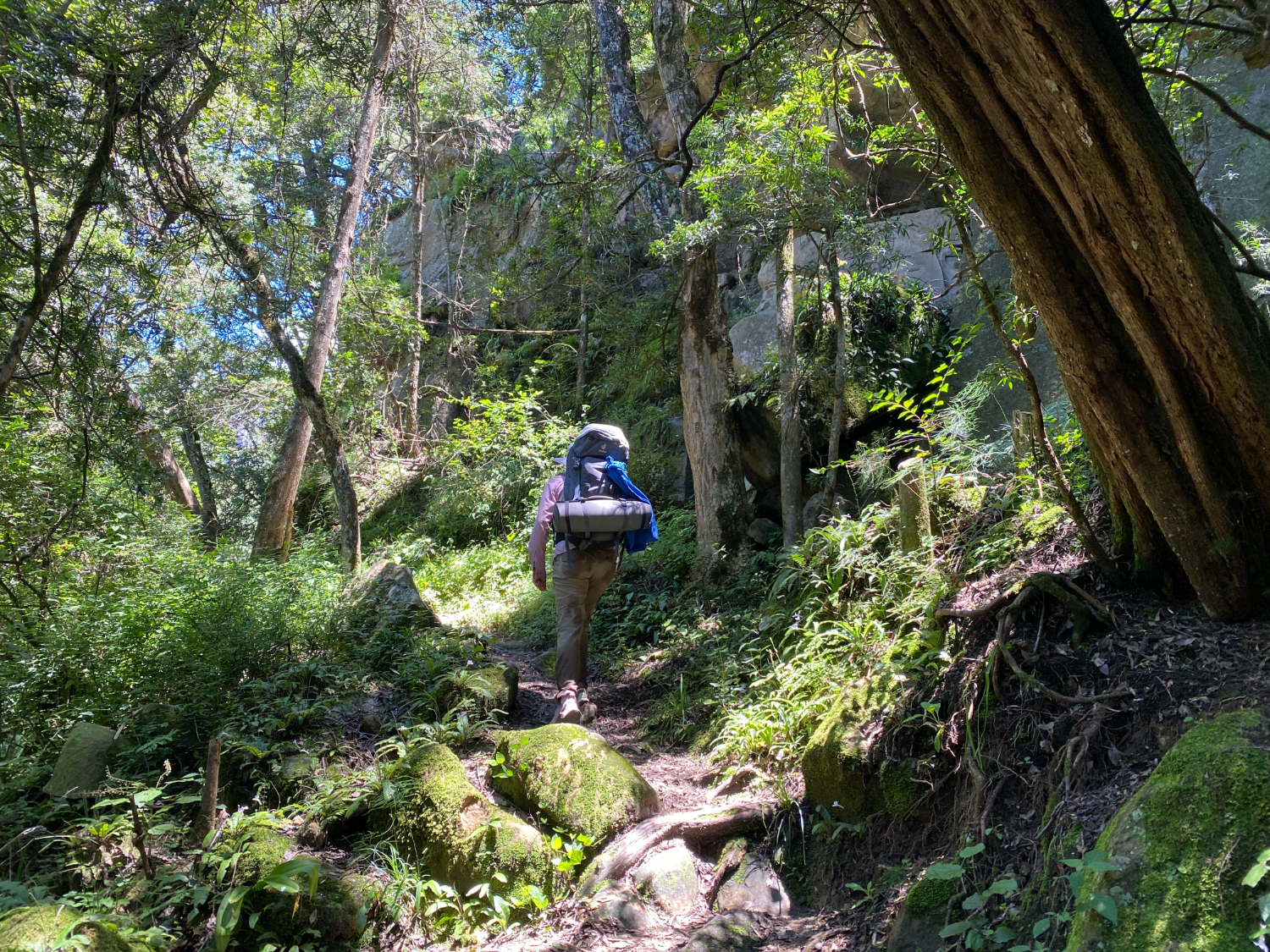
Soon after you leave camp you make your way into the Yellow Wood forest. The old trees tower high above the route, forming a shady canopy for your walkthrough here. The route follows the Old Woman Stream, offering bubbling rock pools for a quick dip. For day visitors this is a must-see, you could spend the entire day lazing about these shady pools.
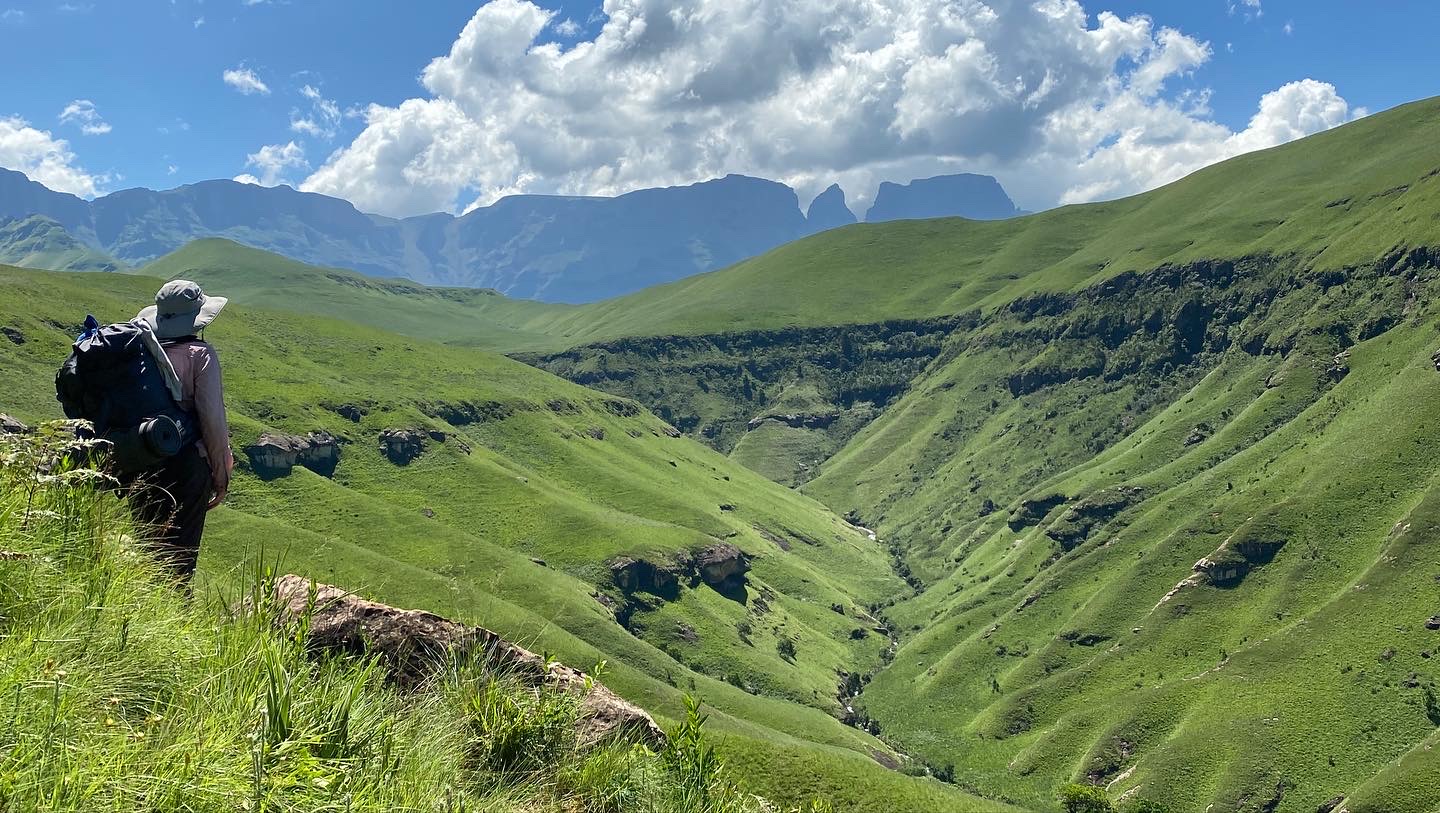
Exiting out of the Yellow Wood forest is where the real “hike” begins. It is a slow but steady ascent, with beautiful views over the valleys and mountains as you climb up. The recent rains meant we crossed numerous small streams and gushing waterfalls spilling over the rock edges. As you rise, there are fewer and fewer trees, so dehydration is a real risk in the heat – make sure you carry enough water as the small streams are muddy and the waterfalls may be difficult to access off the main trail. The Drakensberg receives summer rains, December through February.
You need some degree of fitness for this route if you are climbing with all your gear in the heat of the day. We stopped numerous times for water and snack breaks under small trees found along the route. The real treat was a cool-off under one of the larger waterfalls just off the main trail. This may not be possible in the winter months.
The 3 hours it took us to walk to the caves honestly felt like 6. There are two large caves along the route. We were relieved when we found the first cave, which has a thundering waterfall running through the center of it. This cave was damp and the water incredibly loud so we were happy to not be sleeping here the evening. We continued around the bend and approximately 150 meters further down the trail we found the Grindstone caves. (You actually see the zebra coloured overhang from earlier down the route).
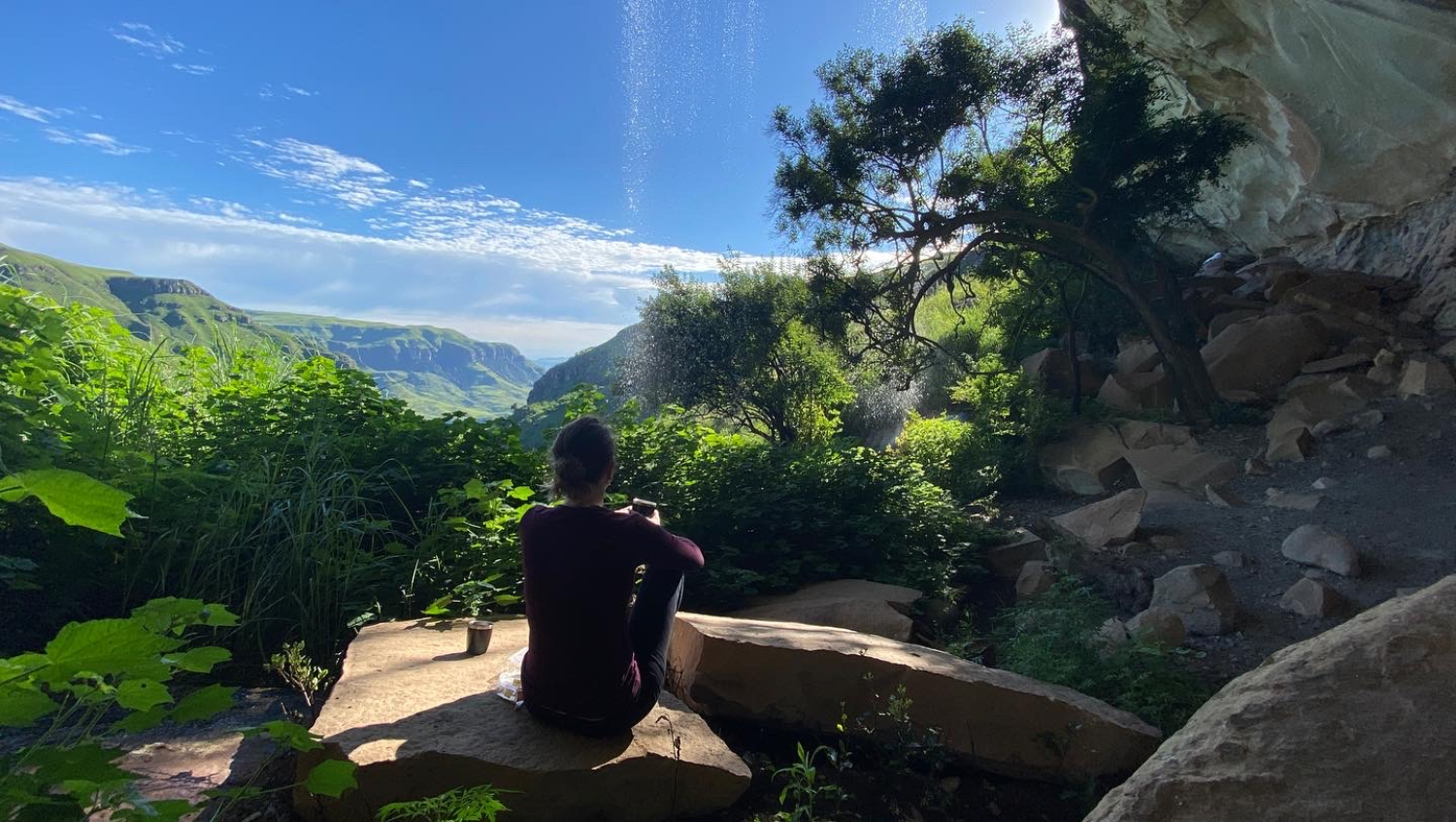
The caves are named after a historic grindstone used by the Voortrekkers which can still be found in there today. These caves are however special for many other reasons. In summer they contain multiple waterfalls of various strengths all cascading down the overhanging edge – a spectacular sight. The sunlight filters through the tree canopies and you imagine yourself in a completely different world. The caves are more like naturally protected rocky outcrops, so you are protected from the elements but sleep in the open.
A small stone outline demarcates the different camping zones within the cave. As we were completely alone, we had our pick of the two sites for the evening. No fires are allowed anywhere on the mountain, so we whipped out our trusty gas camp stove and together with the ready-made meals we had trekked along, we prepared a delicious and memorable dinner.
Not knowing what to expect during the night, we were slightly nervous about the wildlife we might encounter. Of specific concern were the scorpions, snakes, and other scary critters your mind tends to invent when faced with a night out in the open. We chose to get all the risky ablutions out of the way while we had natural light. A thin ground mattress, our sleeping bags and dreams of our critter friends meant a night of very light sleep on the cave floor. Absolutely nothing happened and we were fine, waking up to the first light of the day. The feeling of waking up in the open cave to the view of the valley is hard to explain and something that can only be experienced in person.
We sipped on our morning coffee overlooking the valley with a gushing waterfall cascading over the cave edge. It will be hard to ever top this morning scene.
After a quick breakfast of rusks and left-overs from the night before, we packed up camp and made our way down the same way we came (you can hike on and take an alternative route back through Cataract Valley – this is a ±4 hour trip back to base camp). The walk back down the way we came up is much quicker (albeit slippery when wet) and we were back at camp within 1.5 hours.
Gorge pools:
On the way in or out of Injisuthi, you will see a sign for Gorge Pools. After the hike and on our way out we decided to stop at these pools for a cool down before the drive home. It is a steep walk down into the gorge but well worth the 5 minutes as you will find thundering waterfalls, rapids and rock pools. The water was fast flowing on our visit so keep your wits about you while swimming here in summer. It is an absolute must!
A great way to end a fantastic weekend in the Drakensberg. The memories keep us wondering what the other caves will have in store for us when we return.
Til the next mile,
Wes & Lieza